In case you haven’t followed yet on Instagram (@socalgolfblog), here are three recent reasons:
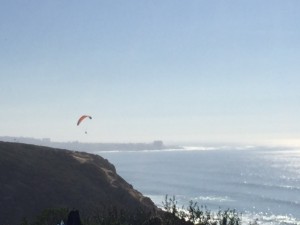
Paragliders at Torrey
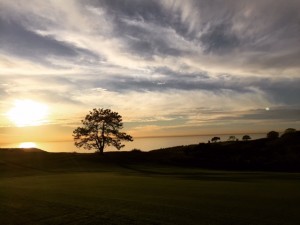
Torrey sunset
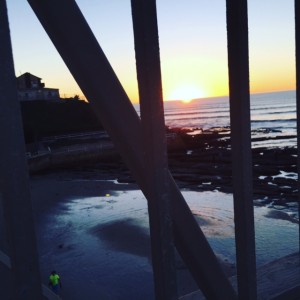
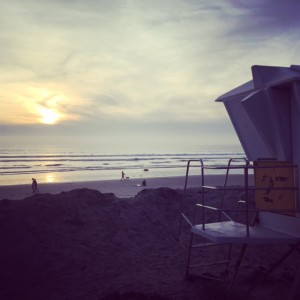
Sunset on the OB pier

In case you haven’t followed yet on Instagram (@socalgolfblog), here are three recent reasons:
Paragliders at Torrey
Torrey sunset
Sunset on the OB pier

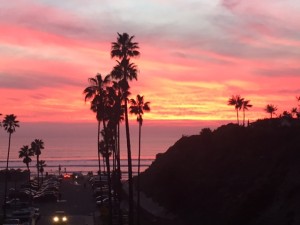
As residents know, California is a winter wonderland not only for its balmy temps but also its sunsets, which tend to be more colorful than the summer variety. Thursday was a prime example. I’ve included a few photos and a video of Thursday’s display. The photo at the end shows you this one’s humble beginnings, but the key was a cloud layer that became an awesome canvas for a natural lightshow after the sun went down. Fascinating stuff.
And would you believe it came from this humble beginning?


If you love golf and you love Petco Park, Callaway Golf has designed your field of dreams on Tony Gwynn Drive.
On Wednesday, Callaway unveiled the Links at Petco, a nine-hole par-3 golf fun house set up inside the stadium giving you shots you thought you might only ever see on a video game. Seriously, who ever thought the fly balls at Petco one day would be golf balls?
Well, obviously, Callaway did.
In a genius dual use of a beloved sports venue, Callaway has given the game a much-need shot of creativity and pure golf fun under the sunny San Diego sky.
Our group teed off a little before 8 a.m. and was initially relieved to see the whole concept hadn’t been turned into a giant water hazard by the previous night’s deluge. What we discovered instead was an urban golf oasis set inside the familiar confines of a major league baseball stadium.
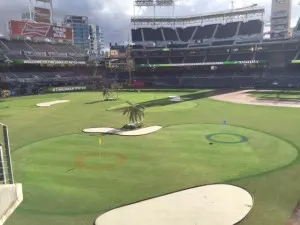
The course includes a “Happy Gilmore” hole
Looking out toward center field, painted targets, flags and palms tree now stood where you’d otherwise find a pitcher and his defenders. Golf gloves replaced baseball gloves and mitts. And “Play ball” meant tee it up and discover an unprecedented day for golf.
The routing was nine tee shots scattered throughout the stadium – eight being from the concourse – toward targets painted on the field. Greens were outlined with a circle drawn around each pin. A ball on the green equaled a par. A ball in the circle equaled a birdie. Anything else was a bogey. And put your putter away. No one’s holing out here. Tee shots only. And this isn’t BYOC. You can leave your sticks in the car. Callaway’s got you.
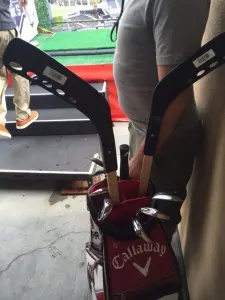
At each tee box, a Callaway bag offered your options. The selections broke down into right- and left-handed clubs for men and women within the appropriate range of options for the distance.
I will tell you up front, this is a tough track, especially with the wind blowing in.
Our group got off the No. 1 tee, behind home plate, in good shape, but then came the elevation change. Hitting from the upper deck toward the outfield, we quickly discovered the Pacific offers up about a three-club wind when it decides to blow.
The goal of getting a hole-in-one to instantly win a new Callaway drive suddenly seemed a little more daunting.
But the real prize was nine holes of pure fun and, for me, discovering Petco Park in a way I never had before. From warming up in the batting cages (our on-deck circle) to actually being at field level, it was a day at Petco unlike any other.
The familiarities of the game soon settled into the new venue. When a tee shot found the brown strip of dirt short of the outfield fence, appropriate ribbing about having warning-track power ensued.
As we were escorted around the course by our female caddie, Heather, the competitive juices soon began to flow and the desire to pull off a golf shot grew as we realized the true challenge the course offered.
Our group eventually racked up a respectable number of pars and even a few birdies on holes ranging from 45 yards to, with the wind, up to about 140. You never went deeper in your bag than an 8 iron.
But I did, indeed, hit an 8 on No. 9, a lengthy hole played toward a green in deep center flanked by a palm tree – and I crushed it. Granted, wind was at my back, but I put one in the cheap seats, an outcome I relished and celebrated on the tee. You can keep your birdie. I just went deep at Petco. I dug that long ball.
But if ever there was a day you wished for a little slow play, this was it. It was over too soon, but given the success (the event sold out in hours at $50 a player) you’d have to imagine it’ll be back after it ends its run on Monday.
And who knows? Maybe it’ll be coming to other big-league stadiums. Who’s up for a West Coast swing? For now, Petco is the Pebble of major league baseball stadium golf courses.
I’m glad I crossed this one off my bucket list, but then again, who would ever thought it would exist.
Congrats to Callaway on an excellent concept and execution. What a great place to play through. Let’s do it again – soon.
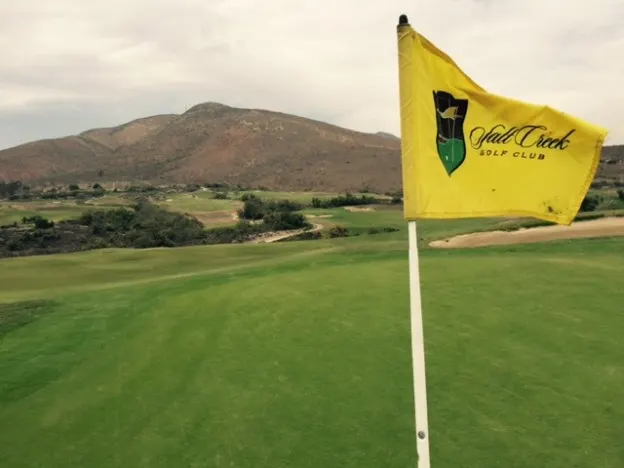

Thanks to the U.S. Open being played at Chambers Bay, links golf has enjoyed an unusual amount of time in the spotlight in 2015.
One course hoping to capitalize is Salt Creek Golf Club in Chula Vista, the most links-like course in San Diego.
Located 15 minutes south of downtown, Salt Creek arrives at its 15th anniversary in the wake of changes in ownership, its clubhouse and its course setup.
The Salt Creek staff is hoping those changes and a month of promotion of links golf turn more people on to the experience. But General Manager Armando Najera and Director of Golf Marco Ochoa know links golf will never be for everyone.
“We have a lot of people who really love it, and then there are some people who it’s just not their thing,” Najera says. “But the people who love it like that it’s a different golf course every day. You can hit the same spot in the fairway two straights days and end up in two different spots because of the wind.”
Getting people to that second round can be tricky, Ochoa says, on a course with multiple blind tee shots and layout quirks to master.
“You get a feel for the golf course after about three to five rounds,” Ochoa says. “But the problem is that a lot of people don’t give it that second chance because it’s not what they’re used to.”
That said, Salt Creek has tried to use exposure of the U.S. and British opens as teachable moments and founder players, especially younger ones, receptive.
“We had our biggest summer attendance ever this summer at our (five-day) golf camps,” Ochoa says. “We’re doing our part to grow the game.”
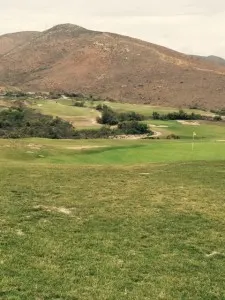
The learning curve with links golf is something you saw play out in real time at Chambers Bay as the pros played it for the first time.
“When you fight links golf, you only get in more trouble,” Najera says. “You’ve got to adapt to the style of the golf course.”
That means good shots won’t always have good outcomes, but bad ones can also get good breaks.
“The course is firm and quick with rolling and sloping hills,” Ochoa says.

But that terrain also for creative play, Ochoa says, especially in the short game.
“It’s bump and run, or we’ll have people putt from 50 yards out,” he says. “You can do that here.”
It takes a similar mix of creativity and club selection off the tee.
“You’ve got to play from the fairway here and sometimes that means taking iron or hybrid or 3-wood off the tee,” Najera says. “It’s not a course where you want to take driver every hole.”
The course is 6,900 yards from the tips, but usually plays shorter due to the terrain, depending on the wind.
“There’s a breeze every day,” Ochoa says, “but when we have Santa Anas, the course can play 500 yards longer.”
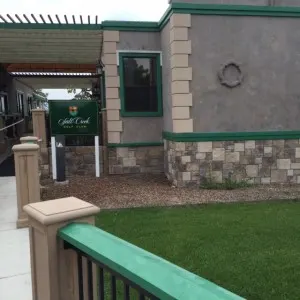
To enhance to the links look and feel of Salt Creek, the new ownership group, Pacific Hospitality Group, gave the clubhouse a faux finish resembling the clubhouses in Scotland.
It also added a deck that can accommodate 80 people and now overlooks the 18th hole, which used to be No. 2. Swapping the par 5s has improved aesthetics and demeanors, Najera says.
“It gives the course a more traditional feel,” he says, “and it’s an easier par 5 so more people leave the course smiling now.”
Keeping locals coming back and attractive new players from players such as Arizona and Canada is crucial to Salt Creek’s success, but Ochoa says the added exposure and appreciation for links golf in 2015 can only help.
“We’re a much different golf experience than anything you find in San Diego,” he says. “It’s what sets us apart.”
Salt Creek By The Numbers
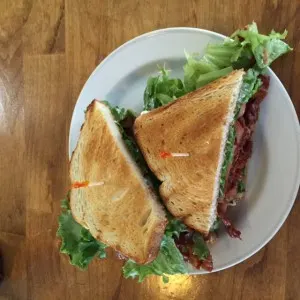
2 – Meals you can get out of the BLT, the par 5 of BLTs
14 – The hole closest to Mexico, which you can see from the green
15 – Time in minutes south from downtown San Diego
2000 – Year the course opened
2012 – Year the course came under new ownership
90 – Drive in minutes between Salt Creek and its sister course, Warner Springs


It may seem hard to be believe that a course sitting in view of San Diego’s city skyline could qualify as a hiding gem, but, alas, that’s the fate of Balboa Park.
The oldest course in San Diego, opened in 1915, is a local favorite yet may barely register regionally or to tourists due to little promotion as one of three city courses run by the city of San Diego.
If outsiders have heard of it, it’s likely in reference to Phil Mickelson playing his formative rounds there – or him still joining his kids for an occasional loop.
Another possibility is catching word of Sam Snead’s course record of 60 shot in 1943, a mark that still carries a magical aura due to the legend attached.

Beyond that, Balboa exists as a humble home to loyal range of local golfers looking to catch a round downtown. But others who don’t experience the place are indeed missing something.
The course is narrow, a bit quirky in places, but it provides unmatched golf course views of downtown and a great walk to boot.
“It’s a cherished treasure in San Diego,” says Paul Cushing, the Assistant Deputy Director for the City of San Diego’s courses. “It has an incredible local following.”
With both an 18-hole and 9-hole course on property, Balboa is a golf venue for all ages – and at a value.
“For $14, you can get out and play nine holes,” Cushing says of the executive course for residents. “You can’t find that hardly anywhere anymore.”
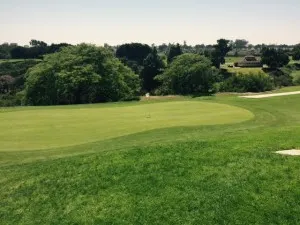
The 18-hole hosts 60,000 rounds a year, the nine-hole 50,000. That’s an impressive amount of play for a game that’s supposedly on the decline.
Cushing says rounds are actually on the rise at Balboa, partly due to recent improvements, such as a new irrigation system and new cart paths along with tweaks to a few holes.
The next steps to increase the lure of Balboa are plans to renovate and update the clubhouse, restaurant and pro shop.
There isn’t a definitive start date, but there is a definitive intent: To attract more non-golfers.
“We’re looking to attract more non-golfers through an upgraded restaurant and more attractive clubhouse experience,” Cushing says. “People in the community really like coming out to Balboa to eat and we’re looking to improve their experience.”
Maximizing the clubhouse view of downtown, which is spectacular, is part of that plan, including adding a patio space.
Expanding a limited pro shop space will similarly expand the options for golfers, many of whom, Cushing says, cherish the exec. course as much as the 18.
“It’s a great, fun golf course with a good variety of par 3s and 4s,” he says. “You can hit every club in the bag, and it’s a very easy walk with trees and rolling hills. People just love it, and it’s very affordable.”
When you play the 18-hole course, aside from the opening tee shot, which is elevated and gives you the first glimpse of downtown, you’re likely to remember the similarly scenic closing stretch. A brief tour:

No. 16, par 5, 555 yards – The fairway bottlenecks, making for a tight tee shot, but if you avoid OB, you’ve got a great chance to score here. Regardless of birdie or bogey, the view from the green here offers the peak view of downtown.

No. 17, par 3, 198 yards – This skyline remains in view from the tee of this elevated par 3. The last of a strong group of par 3s, club down and don’t go long here and you’ll keep par in play.
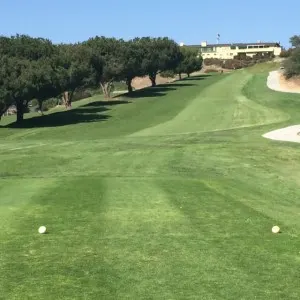
No. 18, par 4, 316 yards – Nicknamed “Cardiac Hill,” this tight closing par 4 is dead uphill, thus the moniker for walkers. Avoid the trees on the left and a walk-off birdie in the shadow of the Balboa clubhouse could still be yours.
After being treated to a fun round and a unique view of the city, it’s hard to imagine a round on San Diego’s oldest golf course ever getting old.
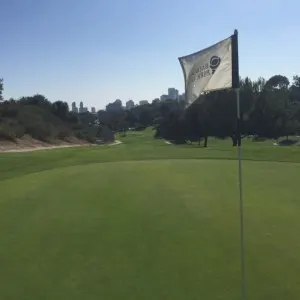
Balboa Park By the Numbers
1915 – The year Balboa opened, making it the oldest course in San Diego
1943 – The year Sam Snead carded the course record (60)
28 – Snead’s score on the front nine of his record round
27 – Holes at Balboa (an 18 and 9-hole exec.)
110,000 – Annual rounds played at Balboa’s two courses
$14/10 – Rate to walk the executive course for residents and seniors
For more information about Balboa Park, or to book a round, go to www.sandiego.gov/golf
Editor’s note: This post is part of an occasional series for the San Diego Tourism Authority – www.sandiego.org – promoting golf in San Diego. http://blog.sandiego.org/2015/07/great-finishing-golf-holes/
Like the ending to a great book or movie, the 18th hole of a golf course should offer an experience that’s both satisfying and memorable.
Few things in golf beat a walk-off birdie, so consider this a short bucket list of places you’d like be lucky to score one in San Diego. The following is a list of some of the best finishing holes San Diego golf courses have to offer:

1. Rancho Bernardo Inn – William Bell, the designer of Torrey Pines and many other public courses in San Diego, did some of his best work on No. 18 at Rancho Bernardo Inn, a hole that’s as scenic as it is strategic.
This closing par 5 begins with a decision off the tee: Do you try to drive the culvert crossing the fairway at around 250 yards or do you lay up? From there, it’s all about positioning to this uphill hole protected by ponds and a stream. That’s a lot of watery waters for things to go wrong trying to reach this narrow, triple-tiered green. But whether you make birdie or bogey, the setting, which includes two fountains, makes the hole and experience unforgettable.

2. Aviara Golf Club – Possibly the most beautiful finishing hole in San Diego is also its most difficult. This dogleg right par 4 wraps around a lake with a magnificent waterfall and offers a gorgeous view of Batiquitos Lagoon on the left. The lake is a popular destination for tee shots – and second shots, as finding the fairway is no guarantee of anything. The second shot, while played to a sizeable green, is deceivingly difficult. The approach is played into a Pacific Ocean breeze that can push your ball right into the water or out of bounds left. Par feels like a birdie here. The pros on the LPGA Tour are even tested by this one.

3. Maderas Golf Club – This straight away par 5 starts with an elevated tee shot over a ravine to a fairway where a majestic giant oak marks the right side. Aim for the oak and then pour all you’ve got into your second shot on this long finishing hole. The green is situated in front of the Maderas clubhouse, which has the look of an Italian villa. You can putt out and then retire to the patio and enjoy a great view of the hole you just played.
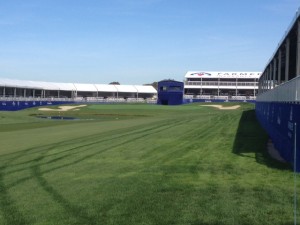
4. Torrey Pines (South Course) – Design-wise, this flat, straightaway closing par 5 may seem fairly ordinary, but what’s happened here makes it extraordinary. As the finishing hole for the PGA Tour’s Farmers Insurance Open, it gets the most TV time of any hole in San Diego. But the lore of No. 18 really ties back to 2008 and the iconic U.S. Open. This is where Tiger Woods trickled in a tricky 12-foot birdie to force the playoff with Rocco Mediate that made that Open legendary and turned Torrey into hallowed ground in golf. Here’s your chance to recreate history.
Honorable mentions: Golf Club of California, Balboa Park Golf Course, La Costa, The Vineyard, Coronado Municipal Golf Course
![hqdefault[1]](/wp-content/uploads/2015/02/hqdefault1-300x225.jpg)
Photo courtesy of www.youtube.com
Out of all the tricks in Craig Hocknull’s bag of amazing golf trick shots, the most impressive one at Golf Fest last year might’ve been one the crowd never knew about: Hocknull performed both shows with a significant injury.
“My thumb was broken,” Hocknull said, referring to the recurrence of an injury that forced him off the professional tours and for a time threatened his performing career.
But that context also makes the compliment he received for his performance at Oaks North all the more impressive. One of the show’s vendors told him, “You know you’re one of the best ball strikers in the world, right?”
A healthy Hocknull will return to Golf Fest on March 6-7 to perform his Outback Golf Show at 1 p.m. each day and amaze audiences again with his unique ball-striking display.
Watching videos of Hocknull’s shows evokes comparisons to a one-man golf X Games. Hocknull hits balls rapid fire. He hits shots from his knees. He hits balls off tall tees and with crazy clubs, including one with a hammer head and another with a whippy seven-foot shaft.
Seeing the shots on video is one thing, Hocknull said. Seeing them live is another.
“I hit each ball solid and for distance,” he said. “A lot of people can hit the ball, but they don’t have the control or hit it as far as I do. I can shape shots.”
Hocknull, who teaches in Arizona and has been a teacher of the year, is in his 13th year of performing and does around 20 shows a year. Hocknull is from Australia’s Outback and got introduced to the game at a young age. His show contains a lot of Aussie themes and elements – and audience participation.
Hocknull often hits balls thrown, or bounced, to him by audience members.
“That’s one of my signature tricks,” he said.
After coming to America to play college golf at Jackson St., Hocknull started to dabble with trick shots after he began his teaching career. He found the routine came easily to him.
“I was able to do most of them the first time I tried them, or within a few swings,” he said. “It was all pretty natural.”
After adding a little showmanship, such a golf magic tricks, Hocknull had a career.
Hocknull said his primary purpose is to entertain, but he hopes the show recruits people to the game.
“I went people to leave the show shaking their heads about what they’ve seen, but also to realize how much fun golf can be.”
He said he’s caught kids on the driving range after the show trying to toss balls in the air and hit them or emulate other parts of his act.
With his hand healed, Hocknull said he’s eyeing a return to competitive golf and possibly the Web.com Tour.
“It won’t be this year because it takes time to line up sponsors,” he says, “but I figure to have a good year competitively.”
Until then, the show goes on.
To purchase advance tickets or learn more about the show, go to www.golffestshow.com.
To learn more about the show and see Craig perform, or to book him for an event, go to www.outbackgolfshow.com.
![golfers_walking_470[1]](/wp-content/uploads/2014/09/golfers_walking_4701-300x162.webp)
Photo courtesy of www.golfdigest.com
Buy 1 SLDR S Driver & Get a Fairway or Rescue Free! Ends November 6, 2014
I had a really fun interview this morning with Chad Beckley of Premiercaddie.org about his company’s caddying services that unwittingly produced the material for a post I’ve been meaning to write for some time.
My list of laments about Southern California golf – and trust me it’s a very short list – includes the lack of walkable courses. Before moving here, I walked the majority of my rounds in the Midwest. In fact, my favorite way to play was to hike out for nine in the late afternoon.
Largely due to course layout and topography of California courses, and a bit due to course business models, a good golf walk in SoCal is tough to find … but not impossible.
But if anyone would know where to find one, it’s a caddy since they make their living on their two feet in golf shoes every week.
Anyway, Chad provided me a list that’s better than I could’ve come up with on my own. But we before we get to that, Chad also makes a great case for walking.
“I’m not a strict purist, but walking is a fundamental part of the game. And it’s good for you,” he says. “Also, I think players who walk have a different respect for the game than those who don’t.”
And a different appreciation. I felt like a new a course better once I had walked it and played better as well. Also, walking builds a natural pacing into your game. And I’d certainly much rather walk on a course where I’m anticipating slow play. Riding in a cart just makes it worse.
But anyway …
So here’s the list from a real authority on the subject.
Best Golf Walks in San Diego, courtesy of premiercaddie.org
1. Torrey Pines
2. Ranch Santa Fe CC
3. El Camino CC (Oceanside)
4. Admiral Baker – “The north course is the sleeper of the county. So good. And great greens.”
5. Coronado
6. Balboa – “It’s a little tougher walk the rest. Definitely No. 6, but still good.”
Of those, I’ve played Torrey, El Camino and Coronado and all three would’ve made my list. I also would’ve added St. Mark’s in San Marcos, although I’m not sure walking is an option at least as far as the cart is included in your round.
Torrey is obviously a fantastic walk. I would likely do it every week if I had a city card. El Camino is where I’ve walked the most and wouldn’t play it any other way. So enjoyable.
I didn’t walk Coronado when I played it but would if I did again. It’s flat as the deck of an air-craft carrier.
Premier Caddie currently provides caddying services primarily at Torrey Pines, Maderas Golf Club, the Grand Del Mar, Del Mar CC and Rancho Santa Fe CC.
If you have any other preferred walks, please post in the comments section, which I know is getting spammed to high heaven. I’m working on getting that cleaned up. Thanks for your patience. The blog is a little busy.
Shop SKLZ Golf – Game Improvement Tools to Improve Distance, Accuracy, Putting and Fitness
 Having grown up without any real-world exposure to the military or military culture, moving to San Diego has an been an almost daily education for me about our nation and its armed forces, and one I’ve enjoyed immensely.
I still get school-boy giddy when I drive the 5 through Camp Pendleton and the Marines are in the middle of exercises – the more tanks, the better – and I’m only too happy to let veterans tell me stories from their days of service.
That said, I was greatly looking forward to finally touring the USS Midway, the legendary battleship moored in San Diego harbor. That day finally came on Friday, and I was simply awed by everything I saw, heard (they simulate sounds of the ship deployed at sea) and learned during two hours aboard the massive ship.
I will say upfront that two hours is an inadequate amount to devote to touring the Midway, so what you’re about to read is more impressions about the tour than a definitive guide. Just getting through the ship , which spans 18 decks and 1,000 feet, is a workout unto itself, much less trying to take in all the educational accents – speakers, flight simulators, artifacts, signage, etc. – that make this such an exquisite education about the Midway, our military, our country and our history.
And you’re doing all this while climbing what amounts to a giant floating jungle gym. You’re always stepping over something, climbing up or down something, or ducking under something while you’re navigating the Midway. That’s just one of many ways in which you get a sense of what life was like on the Midway for the men who were deployed on it for up to six months at a time.
The tour itself is heavy on education about what a military lifestyle was like aboard the ship, but it ends with what for me was a surprising and unexpected look at what it really was like during combat. The war room is set up circa the Persian Gulf War, with war plans and targeting equipment still locked on Iraq. It’s a giant dose of modern history that is made very real by the veterans staffing the ship.
It’s every navy military movie you’ve ever seen come to life and largely how you’d expect it. It’s a powerful way to end the tour and could be one almost unto itself. The map could say, “If you want to go the Persian Gulf War now, report directly to flight deck control.”
But before we throw down on Iraq again, let’s look briefly at the history of the Midway and take a minute to appreciate one of the true marvels of our military.
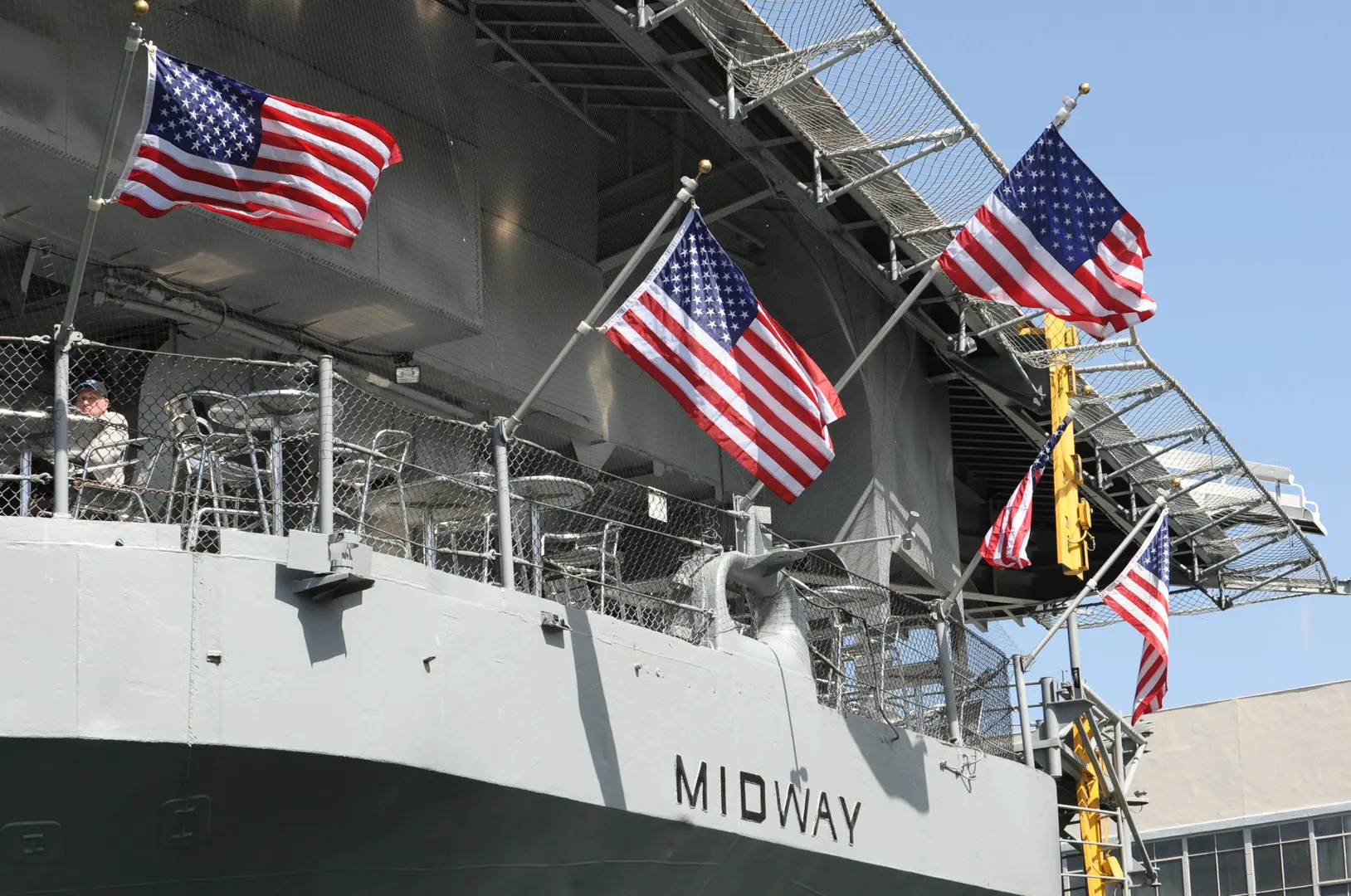
Anytime you tour something as massive and complex as the Midway, you can expect to be hit with a veritable avalanche of mind-boggling facts and stats. The Midway doesn’t disappoint in that regard, but lets at least cover the basics.
The Midway was launched in 1945 and saw action in Vietnam and the Persian Gulf and basically toured the world, including the Arctic, until it was decommissioned in 1992. It now serves as a military museum for a million tourists annually.
The ship weighs 69,000 tons (20 ton in just anchors), is 1,001 feet long, has a four-acre flight deck, consists of 2,000 compartments spread over 18 decks and was home to a crew of 4,500. It was reportedly the first ship to be too big to fit through the Panama Canal.
The program and tour delivers as many of these facts as you could ever want, but to channel my pastor, the master of simplification, let’s just say this: it’s a really big ship.
The enormity of the Midway, of course, is what first strikes you, before you ever board the ship, but your world gets very small very quickly once you enter the vessel. This is not a tour for claustrophobics.
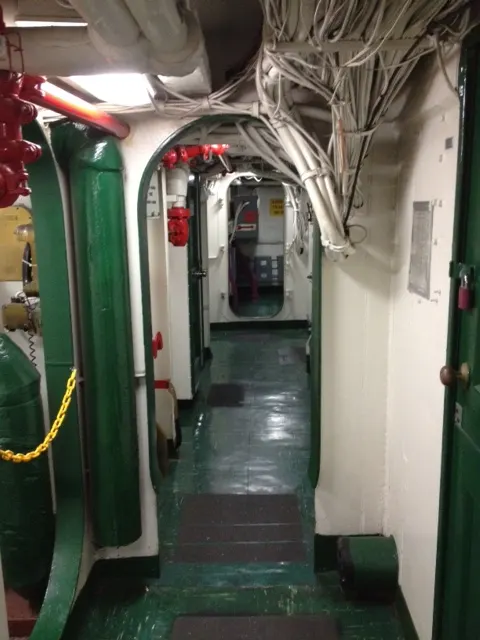
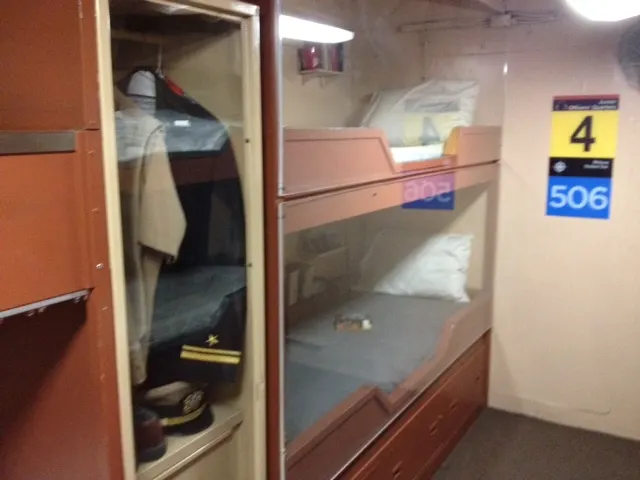
One of your first stops is the cramped sleeping quarters for the crew, and as your progress through the ship, you realize there’s a direct ratio between rank and sleeping space and even proximity of your bed to light. In other words, it’s good to be an admiral.
The lowest bunk looks barely big enough to host a guitar case much less a person, but that’s how many sailors slept aboard the Midway.
In this sailing city, there’s a lot of space devoted to sleeping and eating, and when you’re not in a bedroom, you’re likely in a kitchen or dining room for much of the first legs of the tour, although one of the early stops is the area where they stowed the anchors.
On the audio tour, which is excellent, a seaman shares a story about the ship’s “anchor pool” that tells how when the anchor would drop, the entire crew would look at their watches. What minute and second the anchor dropped mattered in that crew members each had a time reserved in a pool and the corresponding times resulted in more funds for shore leave for the winners.
You quickly get a sense of how crew members passed the time – lots of it – at sea when they weren’t participating in the ship’s day-to-day operations.
And the days had to have been long. For one thing, on the tour, save for a glimpse through a porthole here and there, you rarely see the sun or the ocean. Just think how disorienting that alone must’ve been.
And if you worked in, say, the engine room, the laundry room or another steamy area in the inner bowls of the ship, well, it probably felt a lot like another hellaciously warm place.
We’ll just say that after 15 or 20 minutes below deck on the tour, it’s a relief when you “surface.” Now imagine spending entire days, weeks and months like that.
While seclusion and boredom abounded aboard so did danger, and the danger on the ship lurked much more within than from beyond. As one veteran imparts on the audio tour, “A battleship is an accident looking for a place to happen.”
Beyond the handling and transport of tons of military ordinance and the perilous landing of planes on the ship’s flight deck, the very storing of elements critical to the ship’s operation presented a danger and, in fact, nearly inflicted a mortal wound on the Midway.
While at sea near Japan in 1990, a compressed oxygen explosion killed three crew members and injured eight others. The oxygen plant on the tour was on the same level as the cargo hold, where old photos shot you tons of stored ordinance as well as dozens of aircraft.
It seems like a small detail when the audio tour diverts your attention to the barely noticeable red-and-yellow fire doors that would close off half the hold in case of fire, but then you realize, no detail was too small on the Midway.
Once you reach the cargo hold, or hanger, you finally get close to some of the military planes and helicopters you see before you board the ship. The aircraft on display are from a cross section of aviation history and are marvels unto themselves.
On the flight deck, among other aircraft, you’ll discover the helicopter that retrieved astronauts from the Apollo missions, including the ill-fated Apollo 13, and it makes you start to appreciate all capacities in which the Midway served its country besides war.
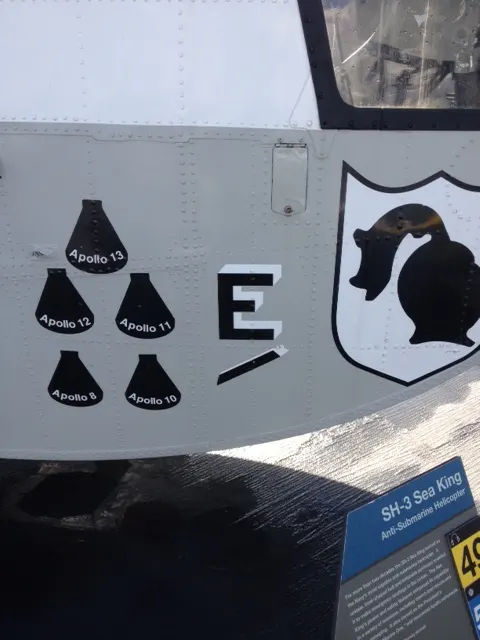
But this was a battleship after all and war was why it existed. Which brings us to the Persian Gulf.
The Midway had previously served in operations in Vietnam, but the Iraq war where the Midway was the flagship for American’s air operations at sea and the pinnacle of the ship’s service.
The ship’s combat command and control is frozen as a time capsule for that period, with CNN’s war footage scrolling, attack plans still adorning the walls of the war room and radar still locked on Iraq. Among the war documents, there’s a sheet of green paper that includes footnotes instructing Saddam “to take a seat and enjoy the show.”
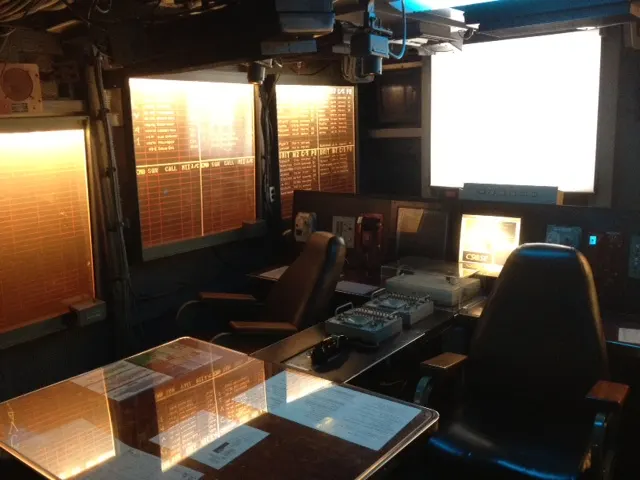
And what a show it must’ve been. Another audio file calls a fully functioning flight deck “the greatest show on earth” and I don’t doubt it, given the coordination of crew and craft.
The volunteer we met in the room where combat operations were coordinated informed us that 25 men ran the show from inside a box no bigger than your living room throughout the Gulf War. It’s always humbling to walk in the footsteps of history, but it’s even more so to meet someone who was there, as this man was.
Now retired for six years, he says he returns to the Midway monthly, driving from Nevada to volunteer for a week at a time. And that’s the type of commitment and dedication that really brings the Midway to life and that I had not nearly enough time for on Friday.
In just brief conversations or overhead bits of presentations, the passion and admiration with which these volunteers share their insights and stories is truly inspiring. They’re the true legacy of the Midway and they make an incredible contribution by giving of their time this way.
Next time, I’m going to allow more time to let them share all they have to offer and, in turn, more fully appreciate what this ship meant to them and our country.
For now, I’m just happy to have had the experience and be better able to share the Midway’s story with others and be better able to properly guide guests on the next tour. This ship has hardly sailed as far as me touring the Midway again. Consider me locked and loaded, and (tail)hooked on learning more.