Tag Archives: Tiger Woods

JC Golf: Our Professionals Pick the Masters

Image

         The Masters, the week that speaks to every golfer’s soul, is here.

The world’s No. 1 player, Tiger Woods, not being in the field due to back surgery has left the tournament without a clear favorite.

While a Tiger-less Masters is a buzz kill for some, true golf fans will tune in regardless to see who slips on the coveted green jacket this year.

Some of the professionals at JC Golf sized up the field this week and dared to predict a winner. You’ll find their picks and rationale below, but feel free to add your favorite in the comments.

Enjoy the Masters, and we look forward to you resuming your regularly scheduled golf season with us after.

Erik Johnson, General Manager, Encinitas Ranch

Pick: Harris English.

Why: “He’s my dark horse pick. He’s a Georgia boy. He’s been on a really good run over the last year and a half or so. He’s very confident. He changed every club in his bag going into this season and he hasn’t seen a fall off, which I think is amazing.

“He even changed his putter after he won two or three times with it. That just speaks to his confidence.”

Blake Dodson, Director of Golf, Rancho Bernardo Inn

Pick: Angel Cabrera

Why: “After losing the playoff to Adam Scott in 2013, it has been forgotten how clutch Cabrera was down the stretch.  Angel is in the middle of the 18th fairway when Adam Scott rolls in a 15-footer for birdie to take a one-stroke lead.  And the Augusta crowd erupts with a Sunday roar!

“Imagine watching that scene unfold in front of you.

“Cabrera, in the middle of the 18th fairway, once tied, is now watching Scott celebrate the lead.  After the green clears, in a heavy downpour, Cabrera stays in the moment and sticks his approach shot to two feet, forcing the playoff.   This type of clutch performance wins major championships and should not be overlooked.  Angel Cabrera is my 2014 Masters pick.”

Troy Ferguson, Head Professional, Twin Oaks

Pick: Graham DeLaet

Why: “Go Canada!” (Troy is from Alberta; Graham is from near Saskatchewan.)

Eric Jeska, Director of Golf, Twin Oaks

Pick: Pat Perez

Why: “He’s a San Diego boy, and nobody else will pick him. Then I can celebrate by myself after he wins.”

Paul Miernicki, Director of Instruction, Twin Oaks

Pick: Matt Kuchar

Why: “He’s the hot guy right now. He should’ve won the last two tournaments. He was just two bad swings away. He’s still won a million dollars more than me the past two weeks. My money’s on him.”

Note: Paul’s second choice is Jason Day.

Lloyd Porter, Head Professional, Oaks North & Reidy Creek

Pick: Charl Schwartzel

Why: “He has been in the hunt before, he has good experience at Augusta (2011 champion), and he’s a great putter.”

Curtis Rowe, Director of Golf, Temecula Creek Inn

Pick: Sergio Garcia

Why: “I think he’s due to win a major, and he’s a great player, good enough to a major. And everybody hates Sergio. I’ll go against the haters.”

Note: Curtis’ American pick is Ryan Moore.

The Aura of ’08 Still Shines Brightly at Torrey Pines

Image


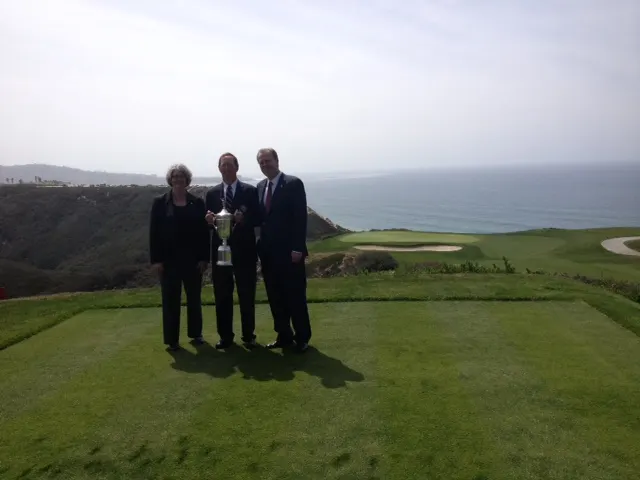
USGA and local officials celebrate the 2021 agreement

In a way, it’s still very much 2008 every day at Torrey Pines.

The mystique of the epic ’08 Open, site of Tiger Woods’ dramatic sudden-death victory over Rocco Mediate, now draws golfers from around the globe to tee it up on the South Course and walk what has become hallowed golf ground.

Merchandise with the ’08 Open logo still sells, stories of that week are repeatedly, and happily, retold and golfers mostly ask, “Hey, when’s that going to happen again?”

Now we know.

Torrey was granted its long awaited and much anticipated encore Tuesday when it was officially revealed “America’s Championship” would return to Torrey in 2021. City and USGA officials jointly announced and celebrated the agreement, passing out 2021 hats and having photos taken with a replica of the U.S. Open trophy.

The sentiment of recapturing the magic of ’08 was expressed by everyone, including the new mayor, using words such as “electricity,” “passion” and “excitement” in what they hoped to recreate in 2021. They’ll will be hard pressed to match the original, but we’ve now got seven years to ponder about how it could be topped.

After the announcement, I asked a few of the Torrey Pines staff members why it is that the 08 Open captured people’s imaginations in a way that few sporting events, not just in golf, rarely do. Think about it: Are people still talking about the 08 Super Bowl? The World Series? The Final Four? No.

Heck, people aren’t still talking about those things from a year ago.

Aside from the Hollywood-level drama, what’s different is part of what makes golf different.

“You can actually play the course where they played the U.S. Open,” says Torrey Pines Head Pro Joe DeBock. “Torrey Pines became very popular just for that fact. The course brings back those memories in a way that just going back to a stadium doesn’t.

“And it was one of the greatest championships ever.”

For comparison, you can try to recreate Christian Laettner’s iconic NCAA Tournament shot, but you can’t do it at the free-throw line of The Spectrum in Philadelphia.

However, you can walk to the 18th green at Torrey and recreate the 12-foot birdie putt Tiger drained to force the championship into an extra day.

And DeBock has. Many, many times now.

“I’ve recreated that putt so many times,” he says. “I originally did it for the media, but people still ask about it all the time.

“It’s a hard putt. If you get it too left, it stays left. It you get it too high, it stays high. It’s a tough putt to recreate.”

But it’s all part of the daily Open conversation at  Torrey.

“I talk about the U.S. Open in every lesson I give, and every tournament we have causes people to reminisce about it. It’s always a hot topic around here and will be even more so now.”

Possibly the only thing DeBock gets asked about more than the 08 Open is when there’d be another one at Torrey. DeBock said he’d been harboring a hunch for a while that it’d be back in 2021.

“When they announced Winged Foot (in New York) for 2020, I started to feel good about us getting it back in 2021,” he said. “When you look at the East/West geography balance, it made real good sense. And enough time had gone by.”

For those that don’t know, by the way, the 2019 Open is at Pebble Beach.

They opened the press event on Tuesday with a video montage of the 2008 Open and seconds later, Tiger was emphatically fist-pumping all over again.

“I still get chills watching that,” confided USGA Vice President Dan Burton. “And I know Rocco does, too.”

In a way the legacy and stature of 2008 has only grown since Tiger’s last putt fell, largely because that’s where his major march toward Jack’s record came to a historical hault.

For what will be six years now when Tiger tees it up at The Masters, Torrey has been the point of reference for his last major title in what still ranks as the most compelling storyline in sports.

Tiger will be 45 when June 2021 rolls around. Where his major odometer will be by then is anybody’s guess, but if he’s still in need of another to break the record, you’ve got to believe this will be coming too late in the game.

But that type of speculation led to a fun thought from Paul Cushing, the City of San Diego’s maintenance manager for golf operations.

“Who knows where the 2021 U.S. Open champion is right now?” he said. “He could be in high school. He could be in another country.

“It’s fun to think about it.”

It is. And we’ve got seven more years to do it. Let the game begin.

ImageFor $36, pin flags from the 2008 U.S. Open still sell

Revisiting “The Big Miss” and Hank Haney’s Predictions About Tiger and Majors

Image

Shop The SLDR Driver – the #1 Driver in Golf + Free Shipping at TaylorMadeGolf.com!

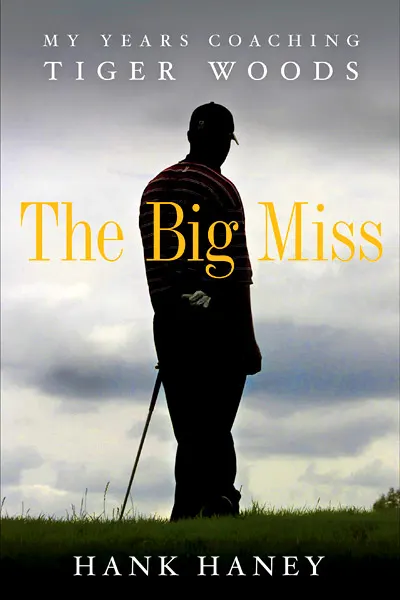
I use the word “revisit” but that’s mostly in reference to myself as I have yet to meet someone in California who actually “visited” Hank Haney’s tell-all about coaching Tiger Woods when it was released prior to the 2012 Masters.

So, for almost all of you, the passages I’m about to quote from the closing chapter of “The Big Miss” will be entirely new.  For what I remember reading at the time, that chapter, titled “Adding It Up,” didn’t get any play in the press coverage of the book, which focused almost exclusively on injuries Tiger incurred while being fixated for a time on being a Navy SEAL and training toward that end.

That was the easy tabloid takeaway at the time from a book that actually gave quite a bit of insight into Tiger and his game, enough that you never watch him the same way again after reading it.

The title ends up having multiple meanings and applications in the book, but its literal meaning is “the big miss” the pros fear off the tee. In Tiger’s case, that’s a big duck hook that comes out under pressure and can ruin runs at titles, and, in the bigger picture Tiger is always measured in, majors.

Haney contends in the book that Woods has more less become scared of his driver and controlling his otherworldly swing speed, thus the club he rode to greatness and domination becoming his nemesis as this point in his career.

That’s why Haney concludes that if Tiger is to break Jack’s record of 19 majors, he’ll have to do it via British Opens, where the courses are hard and fast and more conducive to iron play off the tee.

Eight majors have passed for Tiger since the book was published and so far the predictions in “The Big Miss” are 8-0. I thought about this after the Farmers, when Haney and Tiger got into a media tiff about how much his emphasis on weight training has hampered his swing.

Haney certainly seems to have plenty of appetite left for his issues with Tiger, who now has not won a major since his epic U.S. Open win at Torrey in 2008, leaving him stuck on 14 majors, five short of passing Jack.

As we all recall, Tiger bombed out of the Farmers this year, not even making it to Sunday on a week that many predicted would be just another victory lap at Torrey Pines for Tiger.

That wasn’t the way anyone expected Tiger to start up a new year that followed five wins and another Player of the Year honor in 2013. Momentum seemed to be building again for him and many looked at the Tiger-friendly majors line up and had already predicted, of all things, multiple major victories for him in 2014.

You haven’t heard much from those people since Torrey, but we have heard from Haney, whose book I recently tracked down and partially re-read. Since the Jack vs. Tiger debate is always just bubbling below the surface in golf when it’s not at a full boil, I thought I’d go back and quote a few portions of the book and see how it scores two years out.

I was going to wait to do this prior to the Masters, but Tiger and Hank’s media squabble prompted me to move it up.

So here’s some of what you missed in “The Big Miss” when you missed it the first time.

         “The most asked question about Tiger is whether he’ll break Jack’s record for major championships. … Certainly there are questions of health, physique and technique to consider, but to me the most important issue is desire.”

Here’s where Haney picks up his familiar theme of questioning Tiger’s practice habits and it echoes those of people who wondered how much Tiger prepped for Torrey.

         “I’ve never known a player who lost his hunger for practice to regain that same level of hunger. Nick Faldo, who in his prime was one of the most diligent and intense workers the game has ever known, said that after he won the 1996 Masters, he lost the drive to practice. … That drop-off marked the end of his career as a champion.”

But then Haney’s tone changes and he seems to forecast Tiger being an exception.

     “If Tiger can keep his work ethic strong, he’ll sort out his golf swing. Whatever theory he’s using, he’ll find a way – either in concert with Sean Foley or another teaching or be finding his own accommodation of their theories.”

        However …

        “However, I don’t think simply solidifying his technique alone will fix his problem with the driver. There is a mental issue there that needs to be addressed, and the odds are against it ever being completely resolved.”

And here’s what mean when I talk about this book changing how you watch Tiger. Remember the British Open last year when Tiger couldn’t keep up with co-leader Lee Westwood on Saturday? Westwood was hitting driver and blowing it by him, while Tiger was settling for 3-wood/5-wood/irons and finding traps and losing ground. According to an SB Nation column from the tourney, Woods didn’t hit his first driver until the 39th hole of the tourney. You can look up the column by Emily Kay that basically reads like it came right out of Haney’s book.

Which brings us to Haney’s British Open theory.

        “(The driver issue is) a weakness that tells the most in majors. It’s why, unless he finds some kind of late-career fix with the driver, Tiger’s best chances in majors will come on courses with firm, fast-running fairways that will allow him to him irons off the tee. Of the four majors, the British Open best fits this profile.”

After a strong start, Tiger finished tied for sixth, five shots behind winner Phil Mickelson. His week at Muirfield played into Tiger’s new trend of fading on the weekends of majors.

And it’s largely due to putting. Tiger seems to lose his touch and feel for the greens, which he was already struggling with when Haney wrote his book.

Here’s Hank on Tiger’s putting:

        “I’m not sure what to make of Tiger’s putting problems. Technically, he still looks good over the ball and has a textbook stroke. But putting is undone by the smallest and most mysterious of errors, and players rarely improve their putting after their mid-30s. … His putting, both his ability to lag long ones close and his solidness in holing from within six feet, was the foundation of Tiger’s ability to close out victories when he had the lead.”

And save for a few flurries of vintage Tiger putting in 2013, he largely didn’t look like the player we’ve known.

And if you can’t putt in the clutch, you can’t close, which is what leads Haney to doing a little math about how many majors Tiger will likely need to contend in to get five major victories. And this was Hank’s math going into 2012.

         “He’s not quite the same closer kind of closer, or not quite as fortunate as he’s been, (so) it could take 15 or more such opportunities. It seems like a tall order for the Tiger who enters 2012.”

And now for the Tiger who enters 2014 staring at basically the same equation, but now at age 38.

Hank closes by playing into an argument John Miller trumpets of how intense the media scrutiny will become if/once Tiger moves off 14 and gets his majors train moving again. And this is also where Haney sees the biggest difference from Nicklaus.

         “A final factor to consider it that, whereas Jack Nicklaus’s final few majors were won in a historical vacuum and were essentially padding to his record, Tiger will face ever mounting pressure and scrutiny the closer he gets to No. 19. Assuming the erosions of age, for Tiger, the soon he can get to 18, the better.”

Haney then predicts Tiger needed a major in 2012 to put a restrictor plate on the pressure he’ll feel to go faster to catch Jack as the battle with age and time sets in. Well, we know how that turned out.

Haney closes with a hopeful note on never counting out Tiger’s genius, but then gets back to a central theme of  how Tiger’s personal turmoil caused him to lose his mental edge – and caused his biggest miss, a shot at golf history.

         “Unlike the Tiger who in his 20s and early 30s was virtually indomitable, today’s Tiger has discovered that in like real disaster lurks. … That realization creates doubt, and in competitive golf doubt is a killer.

         “The big miss found its way into his life. If it’s ingrained, primed to emerge at moments of crisis, his march toward golf history is over.”

So there you have it. You can question Hank Haney’s motivations, and especially his ethics, for writing the book, but his observations to date are spot on.

Like I said, I found the book an insightful read, though a bit of flat one, and it adds perspective to understanding of the greatest sports chase/storyline of our lifetimes and the debate that will never die until Tiger either breaks Jack record or hangs up his clubs.

We’ve got a lot of years left on this debate, but the score for “The Big Miss” going into year three post-publish is that it hasn’t missed yet.


Friday FIO Photos: Jordan and Tiger

Image

This was the closest I got to the story of the day on Friday. When Tiger Woods and Jordan Spieth played No. 18 on the North Course on Friday, they passed right by the media center.

After both reaching the par-5 in two, Spieth would birdie while Woods would par, and they would go on to have dramatically different rounds after.

I’ve got some thoughts and observations on Spieth, but I knew he would dominate the post-round coverage today so I thought I’d roll them into a Saturday piece.

I can tell you Woods’ missed birdie putt on 18 was met with a gasp from the gallery; his lipped out par putt to end his round was met my gasps and few jeers by those gathered around a TV in the Lodge. Very curious to observe the great divide of sentiment that still surrounds Tiger.

But what a change in story lines we have from what was expected. Many thought this would be another victory lap for Tiger and instead Torrey Pines has been handed a scintillating rising-star storyline instead. Highly curious to see how this plays out, but no doubt Spieth’s stock went way up on Friday. He was very composed and calm about it after and seemed poised to follow it up over the weekend.

Curious side note: Was selfishly a bit glad to see Billy Horschel climb the leader board Friday after my practice round piece on him.

Spieth/Horschel in the final group on Sunday? I’d write that.

As they say, see you at Torrey.

& here’s a few more of Jordan and Tiger from Friday.

Image

Image

FIO Day One: A Salute To A Classy Tradition

Image

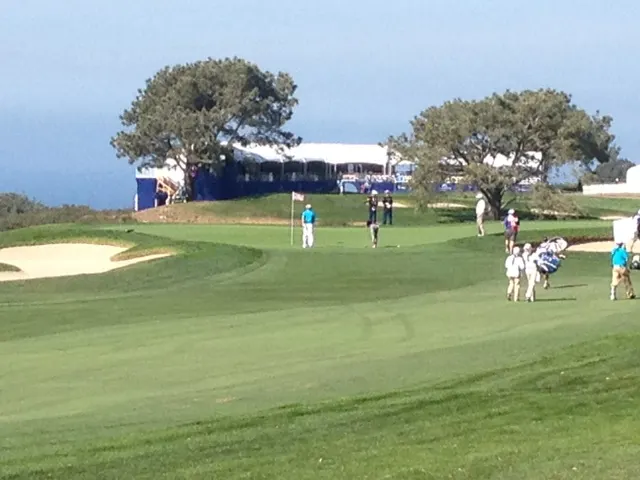
When I arrived at the course today, I made a point to make the 14th hole on the South Course my first stop. I’d heard about the tournament’s annual tribute to the military and wanted to see it for myself.

What I witnessed is an incredibly classy use of a golf hole.

For those unfamiliar with a tradition that is now in its fifth year, the flag on 14 is an American flag. When the golfers reach the green, one of the caddies removes the flag and hands it to one of two waiting servicemen, who are in full dress.

The servicemen hold the flagstick to prevent the flag from touching the ground in a breach of flag etiquette.

When play of the hole is finished, the caddie retrieves and replaces the flagstick and then two more servicemen rotate in for the next group.

This is all staged at a hole were the grandstand, called the Patriots’ Outpost, is filled with active-duty soldiers, sailors, Marines, airmen and Coast Guard, all of whom receive free admission to the tournament.

What a great way to give back to the veterans and honor their service.

The hole is sponsored this year by a company called ViaSat, which is a provider of network services.

ViaSat President Rick Baldridge says half his company’s business involves the military so sponsoring the hole was a natural. The sponsorship included providing the attending servicemen with free Wi-Fi at the event.

“San Diego is a great military town, and giving these guys a venue to come out and bring their families, it’s exciting to them. The military guys love golf. That’s why all the bases have golf courses.

“It’s a noble game and it’s a noble way to honor their contributions.”

I can’t improve on that, but I’ll just say I wish all, instead of some, golfers acknowledged the servicemen before moving on to the 15th tee. Doesn’t seem much to ask.

Image

Pro-Spective: No. 13 on the South

 Image

         This mini-feature is an attempt to look at a pivotal hole each day through the eyes of a former pro who has played the tournament.

Our pro is Scott Bentley, who played the tournament three times in the 80s-90s, which, of course, is before the redesign of the South. Still, 11, 12, 13 was a pivotal stretch then and certainly is now.

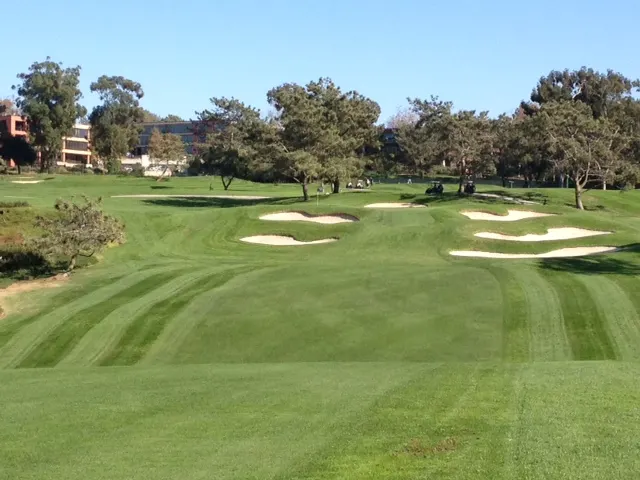
Bentley says it’s hard to talk about 13 without mentioning the holes that precede it, 11 being a long par-3 and 12 being a notoriously tough par-4 back toward the ocean. Then 13 is a par-5 that played over 600 yards on Thursday.

“I always felt like if you bogeyed 11 or 12, or both, it deflated you a bit,” Bentley says. “But if you parred those, you were ready to score on 13.”

There are two tee boxes for No. 13, one being far right that makes the hole more of a dogleg left. That’s how it was played Thursday.

And it was a three-shotter for each of the groups I saw come through. The ones who struggled the most were those playing their second shots from the thick left rough. That included Tiger, but unlike the others, who bogeyed, he managed to save par.

The 13th green is front by tiered bunkers, making coming up short quite undesirable.

“You’ve really got to think about your second shot there if you don’t get home in two, because you want to leave it on an upslope. The greens are firm and won’t hold shorter shots.

“But if you birdie 13, it sets you up to make a little run.”

Bentley is now the Golf Course Manager at Torrey Pines and Mission Bay. He’ll give his hole insights daily here, and we thank for him volunteering.

Gearing Up

Image

If you haven’t yet seen it on TV, you won’t be able to miss it at the course.

Adidas is debuting it’s new adizero blue shoe at the tournament. It’s being sported by all the TaylorMade players and is prominently displayed around the course, including the patio of the clubhouse.

The shoe, in its many styles of blue, is a pleasing color contrast to the launch of the initial line and is certainly less loud that the Big Bird-yellow shoes many players wore a year ago.

It’s also worth a mention is Phil Mickelson’s blue KPMG hat is on sale at the merchandise tent on the South Course.

The proceeds of sales of the hat go to fight illiteracy.

You can learn more at philsbluehat.com.

Broadcast Byte

Tiger Woods’ 2014 tournament debut prompted another round of will-he-or-won’t-he regarding breaking Jack Nicklaus’ record for victories in major championships.

As most golfers on the planet should know, Jack’s record is 18 and Tiger has been holding at 14 for five years now.

I didn’t discover this until I got home and watched the tape of the broadcast, but The Golf Channel’s Gary McCord added a new two-cents of perspective on the chase.

McCord talked about Tiger now being age 38 and what it would take to break Jack’s record with 19 majors.

He used Phil Mickelson’s five majors as a gauge.

“So to get to 19, he’s got to have Phil’s career starting at age 38,” McCord said.

He didn’t really finish that thought, but I imagined him humming, “Things That Make You Go … Hmmm.”


When I Knew I Wanted To Write About Golf

Image

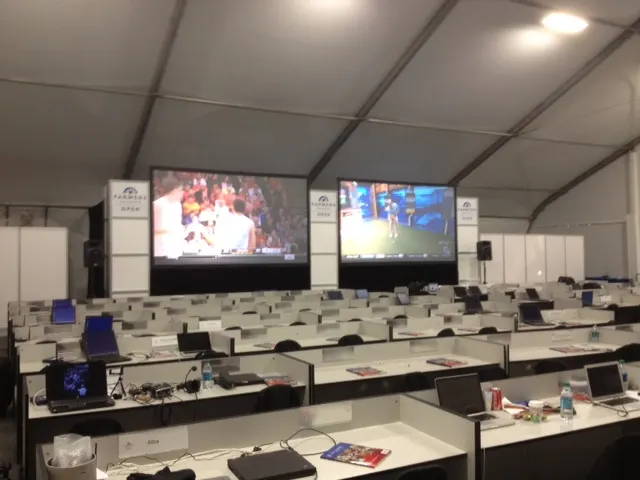
My work space this week

Please excuse the personal post, but this week is a fairly big week for me professionally in that it’s one of those rare times where vision and dreams become reality.

I picked up my press passes and various other media materials for the Farmers Insurance Open at Torrey Pines today and started to plot my week.

Seeing as I was a sportswriter for about 15 years to start my career, and I did cover a string of tournaments on the Nationwide Tour, this whole experience isn’t entirely new to me, but we are talking about the PGA Tour here and that is new, and that’s also part of the dream that brought me to California.

The dream began when a friend from high school who now lives in Chicago invited me to the PGA Championship at Whistling Straights in Kohler, Wisc., in 2010 – you know the one where Dustin Johnson had his “sand trap” trouble?

I’d dreamed of going to be a PGA Tour event, any event really, so having a Major fall into my lap was fairly incredible and exciting even for someone who normally doesn’t get that excited about attending sporting events anymore because of burnout from my career past.

Anyway, before Dustin Johnson made some unfortunate golf history, he changed my life.

The day of the tournament, we walked on to the course in the morning and spent the first part of the day trying to get the lay of the course and get any glimpse of the top Tour talent – Tiger, Daly, Phil, etc. – we could.

We had a pretty good luck, but our best luck came in the afternoon after the crowds had cleared a bit and we had sat down alongside the fairway of a par-4 along Lake Michigan.

We watched about five groups come through and then suddenly two tee balls landed well beyond where any group had been before. Kind of like the tremors in the water glasses in “Jurassic Park,” we knew big hitters were coming over that hill.

It turned out to be Ernie Els and Dustin Johnson.  It was doubly good fortune in that Els was the hot guy at the time and making a run for the day one lead.

Well, we watched them play out the hole and then decided to follow them.

Having birdied the previous hole, Els teed off first on a dog-leg par-5 that was routed around a pond, some scrub and, it being Whistling Straits, naturally some sand traps.

Els played the hole straightaway and fired his tee shot down the fairway. Our group of four had taken up a position to to the right of the tee box. We were talking amongst ourselves when we simultaneously relived we were in imminent danger: Dustin Johnson’s tee shot was aimed at our heads.

One thing to know about watching Johnson live: Don’t blink. He plays fast and hardly takes practice swings.

On this beast of a hole, unfathomably and unpredictably Johnson was aimed to cut the corner. Before any of us could say a word or breath, much less move, Johnson fired. His ball shot straight overhead and it was like we’d just all had our towers buzzed like in “Top Gun.” We heard the ball spinning furiously overhead.

We all exhaled, realized we were still alive and then laughed a bit nervously about the hole ordeal before group curiosity set in about the destination of Johnson’s tee shot.

We tromped through the grassland around the pond before finally emerging at the fairway to discover one very bewildered spotter looking at the golf ball at her feet. She pointed and asked, “Where did this come from?”

We answered, “The tee.”

She asked, “Who?”

We replied, “Dustin Johnson.”

She simply gave an understanding nod.

I asked, “Anybody else try that?”

She said, “Yeah, one guy. Tiger.”

Me: “Where did he go?”

She pointed back up the fairway and into the pond, OB.

Here’s what Johnson had just done: He carried a ball an insane distance of 375 yards into a 25-yard landing strip. He was about to play a heavy duty par-5 on a major championship driver/wedge.

We missed it that night, but apparently the Golf Channel did an entire segment about this shot.

My all-time list of awesome athletic displays I’ve witnessed live reads like this:

–       John Elway throwing a football.

–       Mark McGwire hitting a baseball.

–       Michael Johnson running.

–       Dustin Johnson hitting that drive.

As the awesomeness of what I’d just witnessed soaked in, I decided then and there I needed to be around this great game played at the highest levels a lot more often.

I’d already been traveling to LA regularly to see a friend and was pondering my own California plan when Johnson hit that shot and kind of wrote the script for me.

I looked into the golf industry and jobs within the golf industry and decided it was time to get back into sports writing but in a way totally different than before. And here we are.

Nine months of golf magazine writing and five months of blogging later, I’m more ready than ever to go to work this week.

That work is very much a work in progress as I aim to provided coverage to complement the TV coverage of the tournament, but I have no doubt it’ll work itself out.

I’ll looking forward to a great week and sharing what I can with you during a pretty awesome time for me professionally

Stay tuned.

The Year in Par-3s, Part II

Image


My look at the golf year that was continues with a look at another fantastic trio of par-3s.

Image

No. 3 at Torrey Pines (South Course)

It says it all that when you think of Torrey Pines, this is probably the hole you picture –  unless it’s No. 6 on the North Course, which is its equally incredible ocean-view par-3 counterpart.

Both holes give you that spine-tingling dramatic elevation change. Both holes are played to the stunning Pacific Ocean backdrop. Both holes give you that mesmerizing glimpse of La Jolla in the distance. Both holes also play slow because, well, you just have to take a picture. Have to.

No. 3 gets the nod for the blog this year because we’re not debating which is the better hole. Rather, it’s which one was more memorable to me, and for that I have two moments.

The first came during a practice round for the Farmers Insurance Open. I watched pro Darron Stiles nearly ace the hole. He dropped a shot within 6 inches and then simply turned to his caddie and traded an iron for his putter. There may have been a fist bump, but I know the level of celebration didn’t seem to match to moment. I know it’s their job, but still …

Anyway, there was no such lack of celebration when I dropped my tee shot there to 10 feet in November. An easy 9-iron just cleared the lip of that menacing bunker fronting the green and settled in gently below the hole – a perfect birdie opportunity.

My only regret is that my putt stayed a hair outside. If I could use one retro mulligan for my season, I’d burn it there.

If you want a less adventurous route to par, there’s a significant bail-out area to the right. And left or long is OB.

If you don’t club the tee shot right, it can ugly, which would be a shame on such a gorgeous golf hole. Club down one, trust your swing and you could experience that magical combination of a great golf shot meeting a truly great golf hole.

 Image

No. 6 at Sherwood Country Club (Thousand Oaks)

I gave this hole its own post during Tiger’s World Challenge, so you can look that up if you want to read even more about this one, but you’ll have to look for No. 15 because that’s what it played as during the tournament.

I won’t repeat all of that post here, but I will add a little post-script to that post from the World Challenge.

You can may recall that this hole took a bite out of the pros on Saturday of the World Challenge. Of the 17 players in the field, 11 found the sizeable water hazard in front of the green that day. It turned into one of those golf TV train wrecks you simply can’t take you eyes off of.

Having been there, I have to say that I never saw that coming, but also the wind didn’t blow there the day we played and the commentators said gusts rushing down the mountain baffled the pros all day.

I believe ball No. 11 going in the drink was followed by one of those “boy, that wind really has these guys fooled today” kind of comments from the booth.

Even without the wind, birdie was hard to come by. This green is one of the slickest at Sherwood.

I knocked a 7-iron into the back of the green and then watched my putt turn into a freight train on the down slope. Bye, bye, birdie. Hello, three-putt bogey.

I didn’t feel so bad when I saw that happen to a couple pros.

The day I played, we were in a scramble format and I played his hole on the latter half of the round. After being stunned and amazed over and over, seeing No. 6 for the first time still took my breath away.

Played to the towering backdrop of the Santa Monica Mountains, the way the hole is framed is the complete flip of No. 3 at Torrey, but still entirely awesome.

Several waterfalls feed a group of ponds in the front creating one intricate and fascinating water feature that made the hole an absolute rock star on TV.

I hope I haven’t played this hole for the last time, but if I have, I’ll never forget it.

 Image

No. 7 at Wilshire Country Club (Los Angeles)

During a fairly fantastic two-week stretch of golf, I played Sherwood and Wilshire on consecutive Mondays. Played any time, they would be great, but it was even better the way it worked out because it allowed me to really appreciate the contrast.

Whereas Sherwood is new school golf, Wilshire, established in 1919, is decidedly old school. It’s a shorter course that defends itself very aggressively with an army of rugged bunkers placed anyway and everywhere, many in plain sight, but with some hidden in dastardly places. I half expected to find one lurking in the parking lot after I got done.

So, yes, the bunkers get in your head a little.

I had a full-on case of bunker fatigue by the time I arrived at No. 7 near the end of my round (again, scramble format).

The par-3s at Wilshire are all unique – especially the one with the insanely big two-tiered green – but I picked No. 7, again, because it was the most memorable.

Playing a shade over 140 yards, No. 7 is the shortest of the bunch, but it might be the toughest to birdie. Even with a solid tee shot, the green proved nearly impossible to one-putt.

But to back up a bit to the tee shot, I recall hitting a solid pitching wedge and then absolutely holding my breath during the ball flight, which seemed to last forever. I could tell the caddie and I where thinking the same thing: back bunker.

Instead, my ball hit the back fringe and stuck like it had hit flypaper. Whew!!

That left me a downhill 8-foot slider that was the working definition of touchy. I barely tapped the ball and it never even thought about stopping at the hole. It’s one of those sneaky little putts where if you hit it five times, you might make one. Might.

My three-putt bogey was a bummer, but at least I was spared waging war with the bunkers, unlike my playing partners.

Wilshire is a great course, but it never lets you rest. It made me work for every par that day and only surrendered one birdie despite a bunch of great looks, like on No. 7.

But at least I got to see the Hollywood sign from the course, which certainly ranks as one of the year’s best moments. Hopefully I get to do that again next year.

My par-3 series will conclude with part III, likely on Thursday.

No. 18 at Sherwood CC: Well Done, Mr. Nicklaus

Image

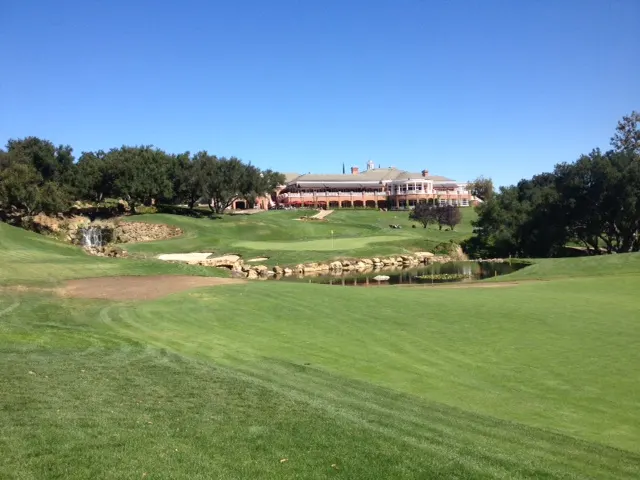
What you see above is the view that greets you after you walk through the clubhouse at Sherwood Country Club. This is the green view of No. 18.

Seeing Torrey Pines for the first time and seeing Sherwood rank as my most memorable California golf course first impressions. At Sherwood, you can’t help but just stand there, take in the scene and then begin to contemplate what it’ll be like walking down that 18th fairway. And then when you do it, it completely delivers on the experience.

No. 18 could well decide the tournament on Sunday as Tiger takes a two-shot lead into the final day of the final World Challenge at Sherwood, where Woods will seek a sixth title.

I’ve thoroughly enjoyed watching this event on TV the past three days and found especially entertaining the travails the field had at the par-3 No. 15 on Saturday (11 balls in the hazard, making it the course’s toughest hole).

No. 18 doesn’t seem to trouble the pros too much, despite a tight tee shot. Tiger in particular has been content to fly a 3-wood to 160-170 yards or so and play from there.

But the second shot is what makes this hole so memorable. What golfer wouldn’t want to be looking at this for a second shot? Isn’t this the challenge we all live for?

Image

It’s about as pretty as it gets, but daunting as well. The day I played, my drive found the right rough of the fairway. I had a clear shot at the green, but I was very leery of the water. The last thing I wanted was to execute the drive and then rinse my approach. So I clubbed up and hit a fabulous 4-iron that carried to the back of the green. It was a club more than I needed, but I was dry.

That approach shot replays in my head every time I see the 18 green on TV. Yes, it was one of those shots.

From the replays, I expect the pin position to be in front today, as it was the day we played. That left me a super slick downhill that I mishit and then I lipped out my par putt. Oh, well. Being on in regulation was one satisfying feeling and rates among my better golf accomplishments for the year.

But enough about me. Let’s give credit here to the designer, Jack Nicklaus, and his fabulous creation. Check out sherwoodcountryclub.com’s hole description to gain a little more appreciation for No. 18.

Nicklaus calls the 444-yard par-4 eighteenth hole the finest finishing hole he has ever created. The tee shot is blind and must be played down the left side allowing the left-to-right slope to take the ball to the middle of the fairway. A mid-to-long iron approach awaits.

The second shot must be played to a multi-level green that presents an extremely visually intimidating shot. The green is protected in front with a rock-filled pond that flows into a waterfall on the right and is connected to another waterfall and stream on the left leaving very little room for error short of the green. There is also a bunker on the left that will catch balls that are missed slightly left. The back right portion of the green is protected by the waterfall, a deep pot-bunker, and a deep grass-bunker. Most shots left short of this green find the water, but balls over the green face a chip or pitch from the deep rough to a green sloping away from the player, taking the shot right back toward the bunker and water.

This is truly a classic finishing hole that ranks as one of the finest in the world.

I’ve hardly played everywhere in the golf world, but I don’t know of a finishing hole I’ve played that rates above it.

So take a minute to appreciate No. 18 today and lament that we might not see it on TV again.  It’s a masterpiece to play and a wonder to watch and a hole that can’t help but make you love this great game just a little more.     Image

The view as you walk off No. 18

Sherwood CC Bonus Hole: No. 17

Image

Seeing as Tiger won’t be back next year, might as well clean out my Sherwood files, right?

Yesterday’s post got a fairly good response, so thought I’d post another hole. I realized this morning I’ve also got a great shot of the 17th hole at Sherwood, another par-3.

Again, I’ll let sherwoodcountryclub.com do the introductions for No. 17:

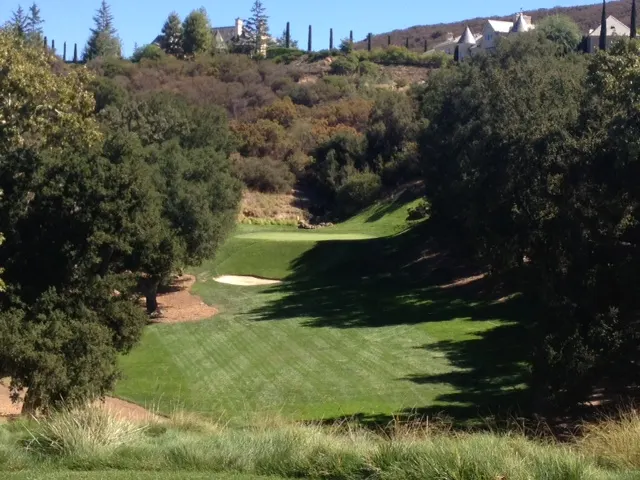
The tee shot on the 166-yard, par-3 eighth hole is from an elevated tee to the smallest green on the course. A large, very deep collection bunker gathers most of the shots short of the green, and a small hazard with a waterfall protecting the back of the green. Missing the green to the right will often result in a bounce off the bank onto the green. Needless to say, club selection is very important on this innocent-looking hole.

From the tee, this looks like a sure par. What I didn’t account for was flying the green and having to hack out of a tough downhill lie to a green sloping away from me. That turned par into bogey.

Doubt the pros will make that mistake, but will curious to see how many birdies this hole yields. Hardly the toughest hole at Sherwood, but certainly a fun one.

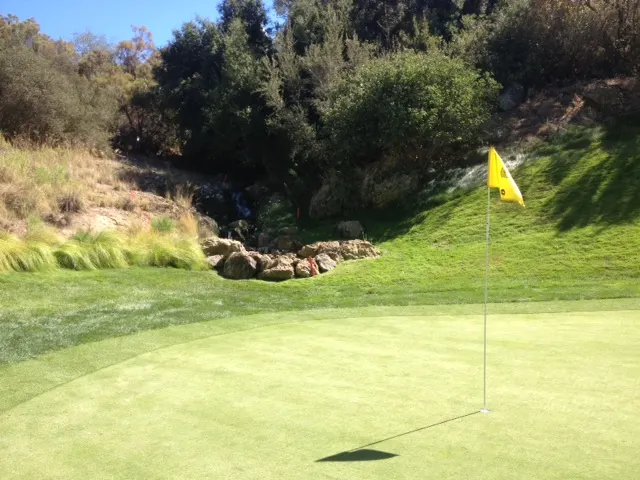
photo-131The view behind the green

Highlight Hole: No. 15 at Sherwood CC

Image

Tiger Woods’ World Challenge plays its final rounds at Sherwood Country Club this week, making this possibly the public’s last view for quite some time of a remarkable private golf venue.

Besides seeing how the pros play No. 18, a tight downhill par-4 to a heavily sloped green fronted by a pond, I’m curious to see how the sixth hole represents on TV.

No. 15 is an incredible par-3 and the course’s signature hole, designed by Jack Nicklaus. Before adding my two cents, here’s the description you get of No. 15  from Sherwood’s web site.

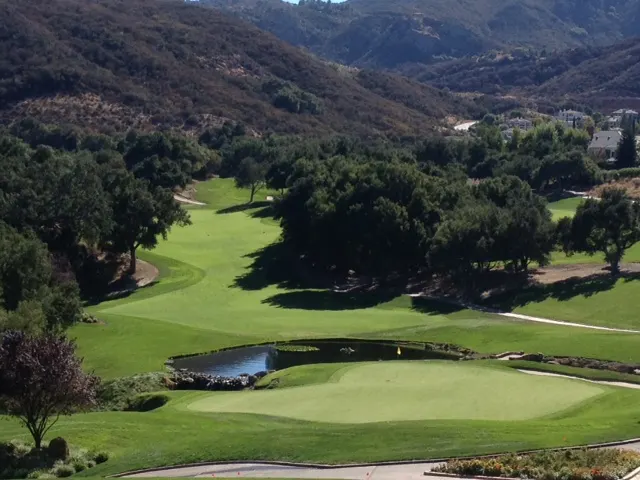
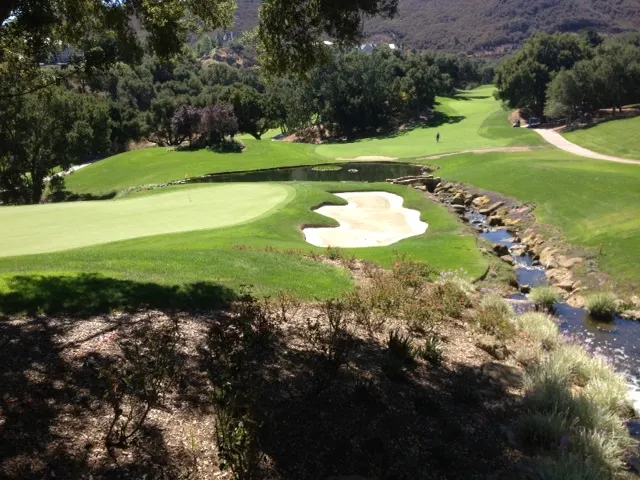
The 189-yard par-3 is the signature hole of Sherwood Country Club. You are greeted by a spectacular view over seven pools and 14 waterfalls with beautiful mountains set as the backdrop. The tee shot is all carry over the water to a green that is only 21 paces deep, so make sure you have the right club, or par will become unattainable.

It’s a stunning amphitheater for a golf hole, one you just want to bask in during your round.

The mountain backdrop is absolutely huge and is part of what makes this hole so awe-inspiring. And the water features are some of the most intricate I’ve been around.

Taken together, it should make for great TV, or a destination hole for you if you’re making the trek to Sherwood.

The day I played it, thanks to being probably clubbed by my caddie, I had no trouble hitting the green. The putt, however, was another matter. It was as touchy as any on the course. The green tilts back-to-front and has subtle undulations I underestimated the first time. Curious to see how the pros do.

You can find descriptions for the rest of the holes under the country club tab at www.sherwoodcountryclub.com. Looks like the weather should be better than last year for the weekend and will hopefully make for a memorable sendoff. If you tune in, look for No. 15 and enjoy a last televised glimpse at a truly great golf hole.

        Image