
Tag Archives: Southern California

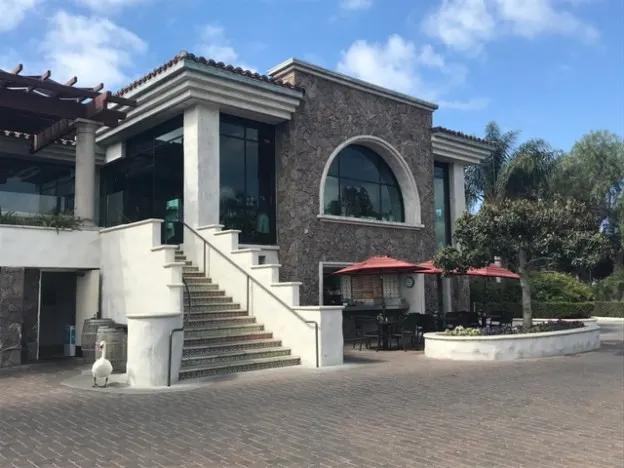
clubhouse

OC Register: An Overview Of The Playing Experience At Old Ranch Country Club

clubhouse

What’s new at the Old Ranch Country Club? Plenty. After 50 years, the course is undergoing a renovation and re-invention of its playing experience. Here’s a look at the upgrades and how they complement and already quality Orange Country country club experience:
practice putt

Practice Has Been Made More Perfect – The improvements begin before you’ve even hit the course. Walk past the newly laser-leveled practice range and you’ll discover a re-imagined short game area, which now features a multi-purpose practice bunker. Members can use it as a fairway bunker and fire shots down the range and then can turn toward the practice green and hone their shorter sand shots. The pins added to a generously sized practice green make it ideal for more precise chipping practice.

The warm-up sand session is recommended as the course has a few strategic bunkers, particularly around its par-3s, where you may be able to save yourself some shots.

New Greens, New Experience – Make your way to the practice green and you’ll get your first taste of the real rock start of the renovation – the new bent grass greens. After only two months to grow in, they roll true and smooth and give you a great feel for what you’ll be experiencing on the course.

Of the new greens, new superintendent Benjamin Alford says: “It’s a whole new species, but it’ll be good for the club and a whole new experience once it grows in. The members will love it.”

Member, and past Club President, Jerry Waletzko has played mature bent grass greens and looks forward to the greens at Old Ranch rolling “like billiard tables.”

While already rolling smooth, golf balls may eventually roll like pool balls but know this: The greens are anything but table top. The greens at Old Ranch are sizable and undulating, making for a number of tricky pin positions. The breaks are more the subtle variety than the bigger sweepers, making for reads the members know by heart and that newcomers get to discover that will make the difference between more birdie and fewer bogeys.

Playable yet challenging – The course itself is playable yet challenging and should be inviting to a range of players. The course opens with four scoreable mid-length par 4s that ease the players in and offer opportunities to score early. A pure ball striker – read: straight hitter – will do well here.

Water dots the course but is more an aesthetic than a strategic obstacle on most holes given some sound course management.

The back nine opens with a drive-able par 4 and later moves to the gradual dog-leg right par-4 12th, which Waletzko said, “many members regard as the best hole on the course.” Find your fade and you might find birdie. Otherwise, a recovery from the trees, like the one Waletzko pulled off during our round, is required. The course is largely forging, but there are obstacles to be encountered if you don’t find the fairway.

IMG_7947

Alternate Tees, Please – We played the member tees (silver), but Waletzko and others like to change it up from time to time and played hybrid tees (a mix of the teeing positions) that allow for some tee shots that provide unique views and, a few cases, more challenging tee shots, such as the through a tunnel of trees over a marsh on No. 3.

“It’s nice to mix it up sometimes,” Waletzko says, “because of the views you get and the shots you get to hit.”


Wildlife Abounds –
Even if you’re not making birdies, you’ll notice them aplenty on the course. The course hosts blueberry houses and you’ll notice a number of ducks and other waterfowl as well as the occasional hawk circling the course. Then there’s Gretchen, the friendly local swan and course mascot. The day I played, Gretchen took a stroll through the practice putting green on her way to the clubhouse before taking a leisurely swim in the lake shared by the 18th green and the 10th tee.


Walk This Way –
Given the undulating and sometimes mountainous topography of many Southern California courses, a walkable course can be a challenge to find. Well, you’ve found one at Old Ranch. It’s perfect for an 18-hole stroll with the clubs on your back or pulling a complimentary pull cart. Turn on your FitBit and walk your way to an aesthetically pleasing 10,000 steps and a hopefully a few birdies. Walking also provides the perfect pace to take in the numerous beautification projects the club has undertaken in the past two years. The greens are verdant and lush, but so are the surroundings.

18 from 10

No. 18 –
Your round concludes at the signature hole, the par-4 18th. The lake encroaches on the left but doesn’t completely cross the fairway on the driving area for this strategic par-4. Depending on your tee shot, and the wind factor, your fairway can run out at around 260-280 yards, making for a decision on the tee. Do you hit driver or check down to 3-wood, hybrid or even iron for the more precise player? Playing into a two-club wind, Waletzko and I were able to swing away. Gretchen was the only birdie on 18 this day, but a great round was had, and we adjoined to the grand clubhouse overlooking No. 18 and celebrated another sunny day in Southern California and Seal Beach.


May Southland

Southland: Drought-Busting Winter Rains A Boon For SoCal Golf

May Southland

You can find the digital version of the story at Southland’s site here.

The winter rains may have been a wet blanket for tee sheets to start 2017 in Southern California, but the weather windfall since is the end of the drought and summer-quality course conditions months early.

The lush landscapes golfers are enjoying are helping courses recover from the drought, and the wet winter, in more ways than just through increased rounds.

Torrey Pines Golf Operations Director Mark Marney said the course scored a fiscal birdie in Feb. via a water savings of $75,000.

“It’s definitely going to help us from a budget standpoint,” Marney said. “But overall the rains have been really beneficial. The course is looking much crisper than it normally would at this time of year.”

Other course general managers across Southern California are echoing similar sentiments, saying spring course conditions are the best they’ve seen in years if not unprecedented.

Arroyo 18

Arroyo Trabuco

At Arroyo Trabuco Golf Club in Mission Viejo not only the course but the surrounding hillsides are so green one could almost confuse Orange County with Ireland. Arroyo Trabuco Golf Club Director of Golf Geoff Cram said the verdant coincidence is uncommon but very welcome.

“It never got cool this winter so our turf never really went dormant,” Cram said. “And then you had fresh water on top of it, so it’s incredibly green. Usually our turf ramps up slowly, but here it is the middle of March and it looks like the end of May.”

Colin Radchenko, General Manager at Steele Canyon Golf Club in Jamul, is witnessing similar surrounds at his course and is amazed by what he sees at courses throughout the county.

“It’s amazing what the water has done not just for us but for every golf course throughout San Diego,” he said. “It’s incredible, and our golfers are loving it.”

Radchenko reports strong play this spring after a winter that was solid as well despite the heavy rain events.

But the best news of all, of course, is that what’s largely regarded as the wettest winter in Southern California since 1983-84 busted the drought. Mike Huck, a water management in San Juan Capistrano who monitors usage by the state’s course, said he never expected a seven-year deficit to be caught up in one wet winter wallop, but it’s blessing that it did, especially for golf courses.

It’s assumed the state will lift some water restrictions of previous years, and if so, courses are indeed looking at a big boost to their budget for one of their largest expenses, Huck said. Various common sense restrictions will remain in place and become permanent such as bans on hosing off sidewalks, washing cars without a positive shutoff hose nozzle and irrigating narrow street medians with pop-up sprinklers.

“There’s probably a 10 percent savings or so that they can look forward to,” he said. “Courses may be able to prolong their savings when they begin heavily irrigating this spring due to the deeply wetted soils.”

There could be an additional savings through continued smart management practices that were born of the drought. While the drought was a painful maintenance circumstance, Huck said Southern California superintendents might now be better resource managers because of it.

“They learned they can live on a little less water than they had in the past and still have acceptable course conditions,” he said. “It forced them into using less, but it might not be a bad thing that it changed their approach a little bit.”

Some practices born of the drought, such as painting fairways and driving ranges, Huck expects to now be common practice regardless of future rains.

“I don’t think you’ll see people over seeding like you did in the past,” he said, “and that’s definitely a good thing.

“During the drought, they made great use of paints and dyes that helped them save on water. And it gives the course just enough color to keep it looking good. There’s no reason that shouldn’t continue.”

The upsides to the end of the drought are obvious for courses, but for some it came at a price. The sometimes severe storms of 2017 took down trees at some courses and caused other on-course damage through localized events, such as flooding.

16 TP North

Torrey North

Marney said course officials at Torrey in particular were holding their breath during storms after a re-designed North Course was still taking hold. It re-opened in Nov. and hosted the Farmers Insurance Open in Jan. Marney said Torrey’s courses mostly weathered the storms, but on occasion grounds crews were sent racing.

“We had some drains on the North that still need to be touched up and fixed, but it was a good test, and it passed,” he said.

Marney in particular noted the bunker maintenance disparity between the North and South Courses in preparation for the Farmers during the rains.

“It would take us two or three days to get the bunkers on the South back in play and on the North, we had no issues at all,” he said. “So in that respect, re-doing the North course really paid off in terms of reduction of time it took to get the course playable again.”

While Torrey was working feverishly last summer to get the project completed, it was also battling an infestation of bark beetles that were threatening its precious Torrey Pines. The lack of rains had sapped of the trees of their natural defense – sap – and the beetles were at one point killing four or five trees a month before Torrey’s maintenance crew introduced better methods to help the trees cope.

The beetles are always around, but Marney said the drought gave them the edge they needed to do great damage.

“You’d see a few trees in severe decline and then they’d quickly move onto another tree,” he said. “It was just moving much faster than it had in the past.”

Thanks to maintenance assist and the return of the rains, however, Marney said the remaining Torreys are recovering and the beetles are at bay for now.

“We’ve learned more and we’re in a different climate condition,” he said. “Both things are helping us out on this one.”

Huck said a handful of other courses faced beetles issues but for most the common fight is the toll years of continuous drought have taken on their trees, many of which Huck says won’t recover.

“Even with the rains, some of them are so far gone that they probably won’t come back,” he said. “It just depends how far into the cycle of death they are at this point.

“When you go through a dry spell like that, it puts real pressure on the trees.”

California’s groundwater reserves have been similarly stressed, which Huck said will be a decade-long recovery process because gains accrue so slowly. But he notes that, for some courses, the droughts did bring previously dry wells back into use.

One of other maintenance practices several courses in SoCal turned to during the drought was turf reduction. They removed turf to make the course more sustainable and replaced the turf with drought-tolerant plants.

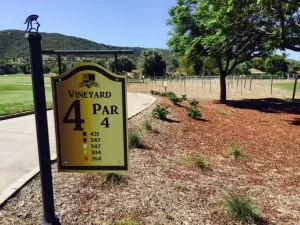
vineyard course

Steele Canyon

Steele Canyon was one course that made a unique use of the reduced area by planting grapevines and establishing vineyards. This spring marks year two of the project and Radchenko is pleased to report buds forming on the still nearly virgin vines.

“It hasn’t really been warm yet, but when it heats up, we expect them to really take off,” he said. “But the water started things popping in the spring and definitely gave them a boost.”

The vines won’t produce a wine-grade grape until next year, but they did produce sporadic fruit a year ago that Radchenko hopes will be followed by lots of rain-fueled bunches and clusters this year.

“We won’t have our first real harvest until 2018, but it’s still great to see,” he said.

The drought ending is a happy ending for courses and hopefully the dawn of a new fruitful year after being hampered by a lack of water, and high water costs, for much of the decade.

The return of business as usual is certainly welcome by staffs at all California courses and Radchenko said golfers are celebrating it as well.

“Our rounds up and people are excited to get out and play,” he said. “But mostly it’s just nice to look at all the surrounding areas and see everything green after years of brown, brown, brown.”

Taste of Torrey: Taking the Test of the South Course

ImageNo. 12 at Torrey Pines (South)

Seventeen months after unpacking my golf clubs in Southern California, I finally realized one of the tee times of my dreams on Tuesday: the South Course at Torrey Pines in La Jolla.

The South, site of the 2008 U.S. Open and the annual PGA event, is where you come to walk in the footsteps of the pros and test yourself against the best.

As much as I had wanted to play this round soon after I moved out, I was cautioned to be leery of the challenge and really wait until my game was ready, or, I was told, it’d be like booking a luxury cruise and spending the entire time fighting sea sickness.

So I waited and let destiny decide the day, which finally arrived when I was invited to play the media event for the PGA’s Farmer’s Insurance Open, which takes place Jan. 23-26.

The day before my round, I recalled the speech I gave in golf school about the history of Torrey Pines. After my presentation, I asked for a show of hands from people who’d played the course. Six hands went up, which was reduced to two when I asked about the South.

Having not even walked the course, but plenty aware of its reputation, I asked what made it so tough.

The greens? “No, not any more severe than many country clubs you’ll play,” I was told. OK.

The sand? “Plentiful, but not impossible and avoidable with smart play,” I was told. OK.

The rough? “Can be a little tough,” they conceded.

OK, what is it then, I asked.

“The par-4s.”

I looked up the scorecard for Torrey and immediately understood. I saw par-4 blue tee yardages of 467, 445, 462 and 422 and grasped what they meant. More or less, make friends with your hybrids and long irons before you go because you’ll be playing them often on your second shots.

Per the set up of my event, I played the whites on Tuesday, which spared me about 400 yards and I figured would mitigate the challenges and make the course manageable.  That proved correct on the par-3s and par-5s, but some of the par-4s still proved beastly hard.

When we arrived at the first tee, we were cautioned about the thickness of the rough due to recent overseeding and told to make sure to track our shot “or you probably won’t find it.” In other words, it was the starter’s way of saying, “Good luck.”

When I got out on the course, I discovered the rough to be about like after a good five-day rain in the Midwest. Uncommonly thick for California, the rough, combined with the narrow fairways, proved to be the real challenge of the round.

Having played the beautiful, but more benign, North Course back in May, the South felt familiar, but it didn’t take long to realize I was in a very different place than just the other side of the course, although my game certainly held its own in the early going.

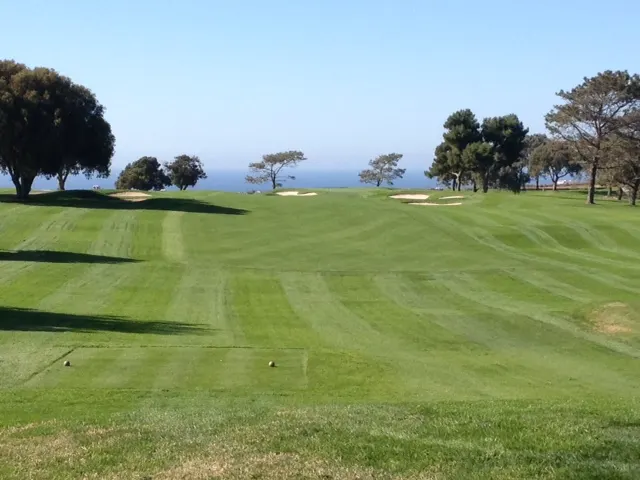
ImageNo. 3 at Torrey Pines (South)

Highlighted by a par on the iconic No. 3, the par-3 with the postcard-perfect view of the ocean and La Jolla in the distance, I actually carded a respectable opening nine (even on the par-5s, one-over on the par-3s) and finished the front with the type of momentum that had me expecting the best was ahead on the back. I’m here to report that didn’t happen.

Rather than bore you with a hole-by-hole breakdown of my closing bogey-fest, I’d like to walk you through a hole to give you an idea of what it’s like to be caught in the clutches of the South course.

For that, I submit my experience at the 12th, a gorgeous uphill 443-yard par-4 played back toward the ocean into a gentle breeze. Save for the length and the standard bunker cluster and tree trouble on the right, the hole looks manageable from the tee and might be if you hit the narrow fairway, which I didn’t. Instead, I pushed my tee shot right, about 20 yards into the thickest rough on the course.

After a lengthy search, during which I discovered two other balls before my own, I found my drive and was pleased to discover it was actually plenty long, just misplaced. I was 210  yards out, but a tree and the rough made a shot at the green impossible. It was a classic punch-out scenario, so I took my 4-iron and tried to muscle it out of ankle-high rough about 150 yards back in the fairway. I watched the ball shoot out low, hit the rough 5 feet before the fairway and … stop. Sigh.

I was 81 yards out but at the mercy of the rough I’d had already hacked out of too often. And this is where the course starts to work on you. Fearing the thick rough muting my shot, I hit a full gap wedge. I caught it clean and carried the green, with my ball, ignoring my pleas, just barely disappearing off the back. Ugh.

I found my ball just where I’d expected: five feet off the putting surface in thick rough, chipping back to a downhill. You probably can guess what came next. Trying to be too precise, I flubbed my chip four feet, leaving myself another nightmare chip. This time, naturally, the ball whizzed past the pin, leaving me a 25-footer.

I two-putted for a seven. The same scenario had basically played out on the two long par-4s on the front. As I was told, that’s where the course gets you.

Anyway, when you come to Torrey and are faced with deciding North vs. South, if you chose South, expect this to be you at some point. It’s part of the whole risk-reward thing, but, challenge aside, the rewards are many. A peaceful, awe-inspiring, historic setting. Birdies you truly will cherish if you are so lucky (I really would have loved to sink that 10-footer on No. 3). And a challenge that lets you know where your game really stands in the great golf universe.

The only question now is if you’re ready to hear the answer.

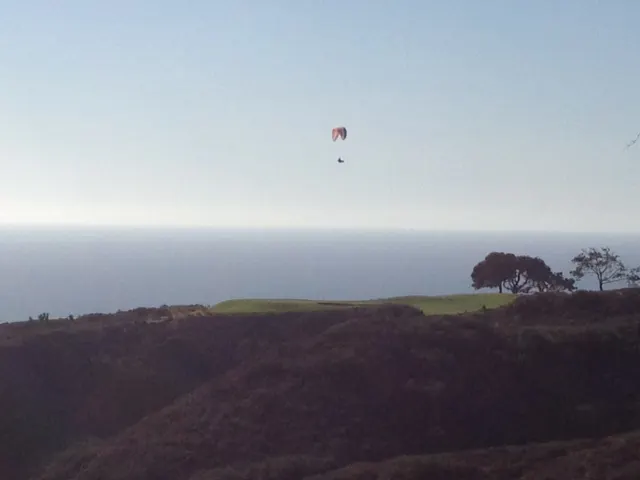
ImageVIew from the 17th fairway (South), looking back toward ocean and the North Course.